Water damage rarely stays in one spot. A burst supply line under the kitchen sink can soak cabinets, then wick into the hallway carpet and the room below. The first question most homeowners ask is simple: what is this going to cost?
The honest answer is that water damage restoration cost by room depends on three things: how big the wet area is, what materials got soaked, and whether you handle it yourself or call a pro. Below you will find real-world price ranges, a room-by-room table, and a straight look at DIY vs hiring help.
If you are standing in wet carpet right now, stop reading and start drying. You can also call (888) 217-4575 for 24/7 help and a local crew.
What Drives Water Damage Restoration Cost
Two rooms of the same size can have very different bills. Here is what moves the price up or down.
- Water category. Category 1 is clean water from a supply line or rain. Category 2 is gray water from a washer or dishwasher. Category 3 is black water from sewage or outside flooding. Higher categories mean more removal, disposal, and sanitizing.
- Square footage affected. Most pros charge by the square foot for extraction, drying, and rebuild.
- Materials. Carpet and pad are cheap to replace. Hardwood, tile, and cabinets cost more to dry or remove.
- How long it sat. Water that sits 24 to 48 hours often grows mold, which adds a whole extra phase of work.
- Hidden moisture. Water travels under baseboards, into wall cavities, and through subfloor. Pros use meters and thermal cameras to find it.
- Rebuild needs. Drying is one thing. Replacing drywall, trim, flooring, and paint is another.
Water Damage Restoration Cost by Room
These ranges are for common single-family homes. Your local labor rates, ceiling height, and material choices will shift the numbers. Treat them as planning ranges, not quotes.
| Room | Typical Size | DIY Cost (materials only) | Professional Cost |
|---|---|---|---|
| Bathroom | 40-60 sq ft | $150-$500 | $1,000-$2,800 |
| Kitchen | 100-200 sq ft | $300-$900 | $1,800-$4,500 |
| Bedroom | 120-200 sq ft | $250-$800 | $1,500-$3,800 |
| Living room | 200-350 sq ft | $400-$1,200 | $2,200-$5,500 |
| Basement | 300-700 sq ft | $500-$2,000 | $3,000-$9,000 |
| Hallway or closet | 20-50 sq ft | $100-$400 | $700-$2,000 |
Notice the pattern. Small, hard-surface rooms like bathrooms cost the least. Big carpeted spaces and basements cost the most because there is more material to dry, remove, and replace.
Bathroom Water Damage
Most bathroom leaks come from a toilet seal, a shower pan, or a supply line. If the water stayed on tile, cleanup is mostly drying and sanitizing. If it soaked into the subfloor or the ceiling below, expect drywall and flooring work. Pros often charge $1,000 to $2,800, with more if the ceiling below needs repair.
Kitchen Water Damage
Kitchens mix water with cabinets, which is a bad combo. Particle board cabinets swell and usually cannot be saved once soaked. A dishwasher or fridge line leak can push the bill to $1,800 to $4,500 once cabinet removal and replacement are added.
Living Room and Bedroom Water Damage
Carpet and pad are the big cost here. Pad almost always gets thrown out. Carpet sometimes can be dried and cleaned if water was clean and you acted fast. A pro job in a living room usually lands between $2,200 and $5,500.
Basement Water Damage
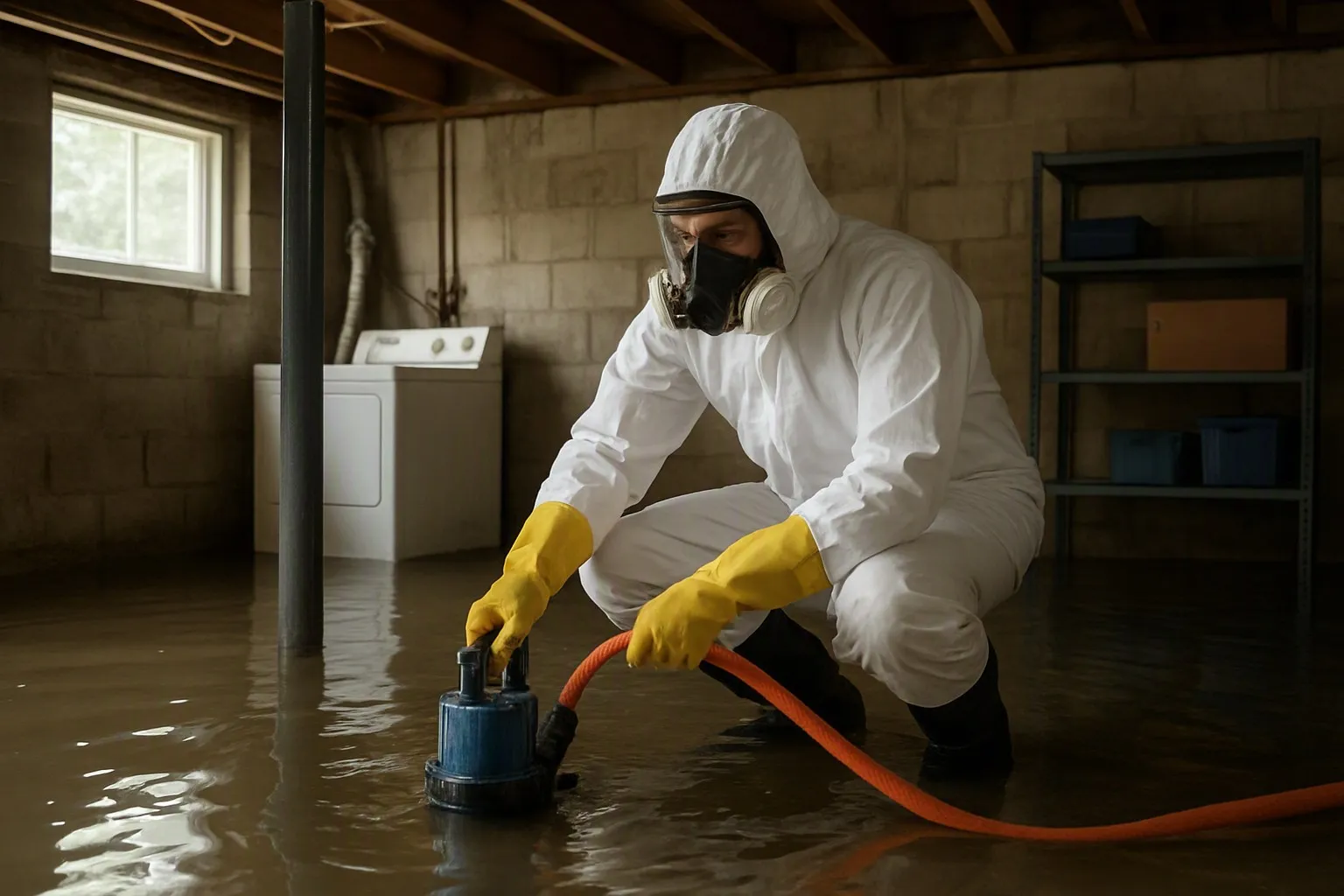
Basements are the most expensive room to dry. Water pools, walls are often concrete or finished drywall, and humidity stays high. Sump pump failures and outside flooding are common. Costs often run $3,000 to $9,000, and that is before any mold work.
DIY vs Professional: What You Need to Know
DIY can work. It can also go wrong in ways that cost more later. Here is a fair look at both sides.
DIY Pros
- Much lower upfront cost, often 40% to 70% less
- You control the schedule, no waiting for a crew
- Fine for small, clean-water spills in one room
- You may already own a wet vac and fans
DIY Cons
- Renting drying gear can cost $100 to $300 per day
- Hard to find hidden moisture without meters
- Mold can start in 24 to 48 hours if drying is incomplete
- Insurance may question the claim if a pro did not document it
- Mistakes often mean replacing the same floor twice
Hiring a Pro: Pros
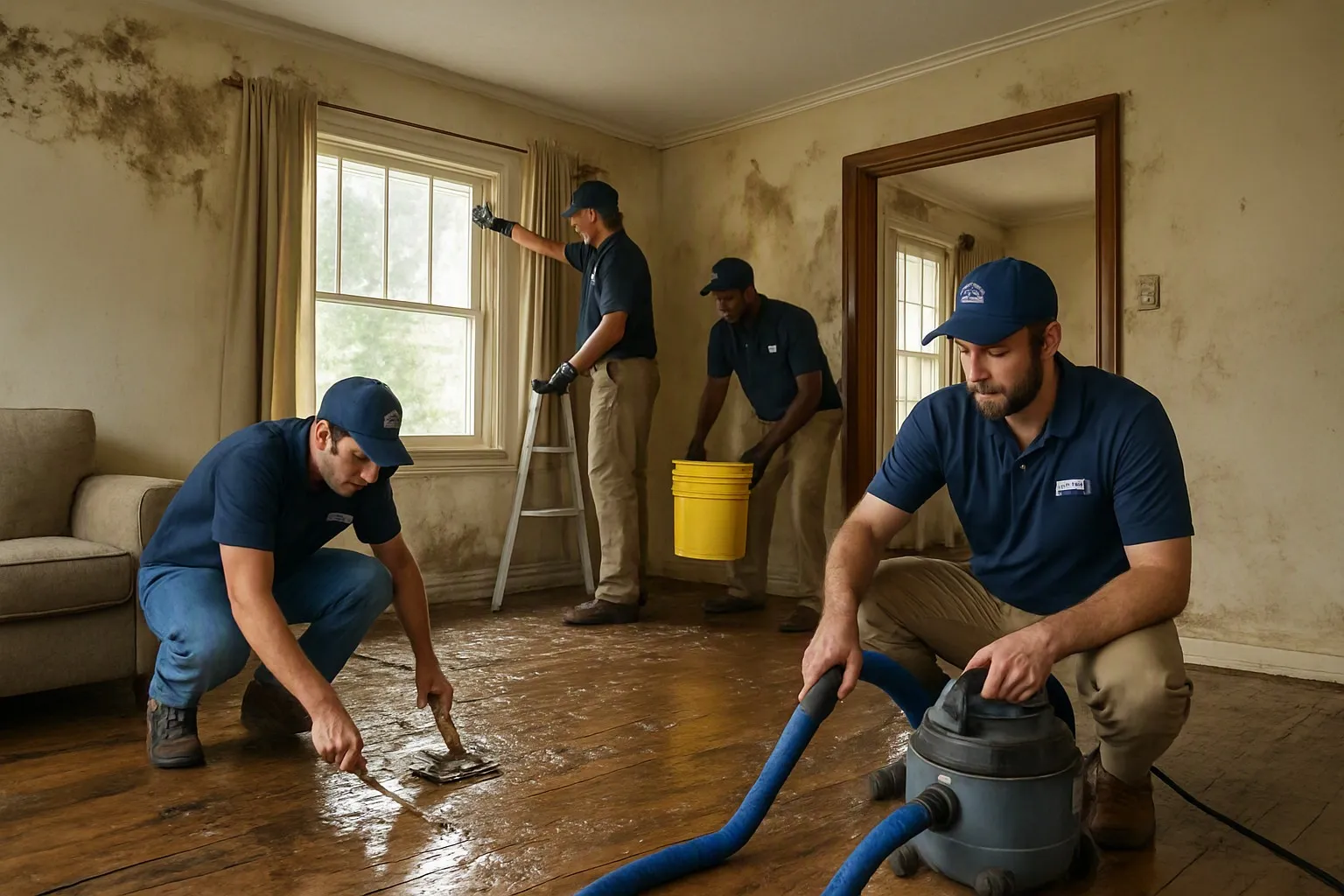
- Industrial pumps, air movers, and dehumidifiers dry faster
- Moisture mapping finds water you cannot see
- Documented reports help insurance claims
- Handles sewage, mold, and large losses safely
- Work is often warrantied
Hiring a Pro: Cons
- Higher upfront cost, usually $1,200 to $3,500 for one room
- You may wait a few hours for a crew during storms
- Not all companies are equal, so vetting matters
When DIY Is Actually Okay
DIY makes sense when all of these are true:
- The water is clean (Category 1) from a supply line or rain.
- The wet area is under about 100 square feet.
- You caught it within a few hours.
- The floor is tile, vinyl, or sealed concrete, not hardwood.
- No sewage, no outside floodwater, no mold smell.
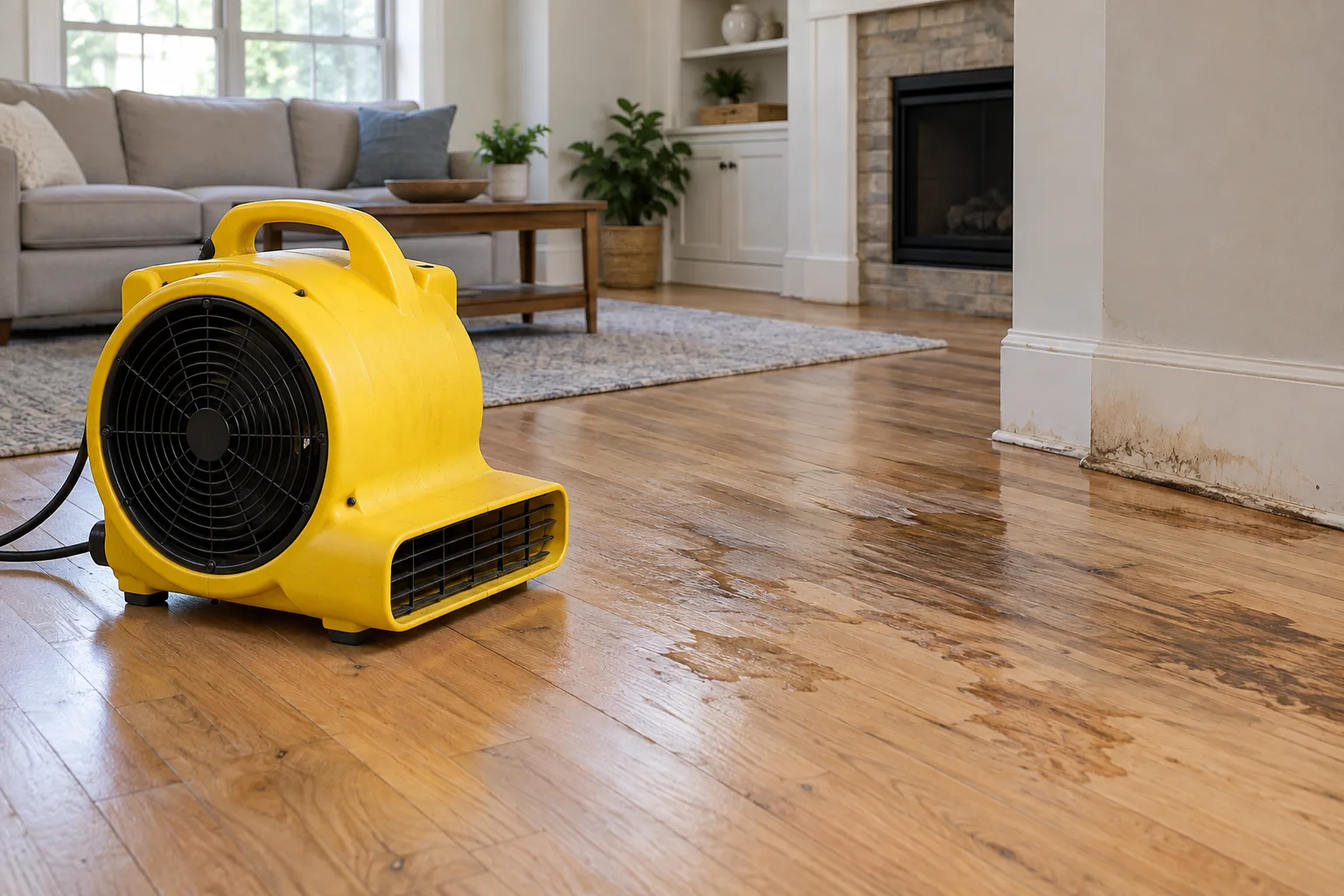
If you meet all five, you can rent or buy a wet vac, pull up wet carpet, run fans and a dehumidifier, and check the floor with a cheap moisture meter. Keep it running for 3 to 5 days, not one afternoon.
When You Should Call a Pro
Call in a professional crew if any of these apply:
- Water is from a toilet, sewer, or outdoor flood (Category 2 or 3)
- The area is larger than one small room
- Water has been sitting more than 24 hours
- You see or smell mold, or you have had mold before
- Walls, ceilings, or hardwood floors are wet
- The damage reaches a basement or a room below
- You plan to file an insurance claim
In these cases, the extra cost usually pays for itself. Hidden moisture that stays behind turns into mold, and mold removal often costs more than the original water cleanup.
How to Keep the Cost Down
- Act fast. The first 24 hours matter more than anything else.
- Shut off the water. Find the main valve and stop the source before you clean.
- Document everything. Photos, notes, and receipts help your claim.
- Call your insurer early. Many policies cover sudden water damage, not slow leaks.
- Get more than one quote if you are paying out of pocket.
- Ask what is included. Drying, demo, sanitizing, and rebuild are often separate line items.
Frequently Asked Questions
Does homeowners insurance cover water damage restoration?
Usually yes, if the damage is sudden and accidental, like a burst pipe or failed water heater. Slow leaks, poor maintenance, and outside flooding often are not covered. Flood damage typically needs a separate flood policy.
How long does professional water damage restoration take?
Drying usually takes 3 to 5 days with professional equipment. If rebuild work is needed, add one to three weeks depending on materials and permits.
Can I just use fans and a dehumidifier instead of hiring a pro?
For a small, clean-water spill in one room, yes. For anything larger, or if water reached walls or floors, household fans usually cannot dry it fast enough to stop mold.
What is the cheapest room to restore after water damage?
Small bathrooms and closets with tile or vinyl floors are usually cheapest, often $700 to $2,000 with a pro, because there is less material to dry and replace.
How much does mold removal add to the bill?
Mold work often adds $1,000 to $3,000 or more per affected area, depending on how far it spread. That is a big reason to dry quickly and completely the first time.
Do I need to move out during restoration?
Most single-room jobs do not require moving out. Large losses with sewage, heavy mold, or no working bathroom or kitchen may make a short stay elsewhere safer.
Bottom Line
Water damage restoration cost by room ranges from a few hundred dollars for a DIY closet cleanup to $9,000 or more for a finished basement. DIY is fine for small, clean spills you catch early. For anything bigger, wetter, or dirtier, a pro saves you from mold and repeat repairs.
Not sure which way to go? Get a free answer in minutes. Call (888) 217-4575 any time, day or night.
Water is still spreading? Every hour raises the cost and the mold risk.
Call (888) 217-4575