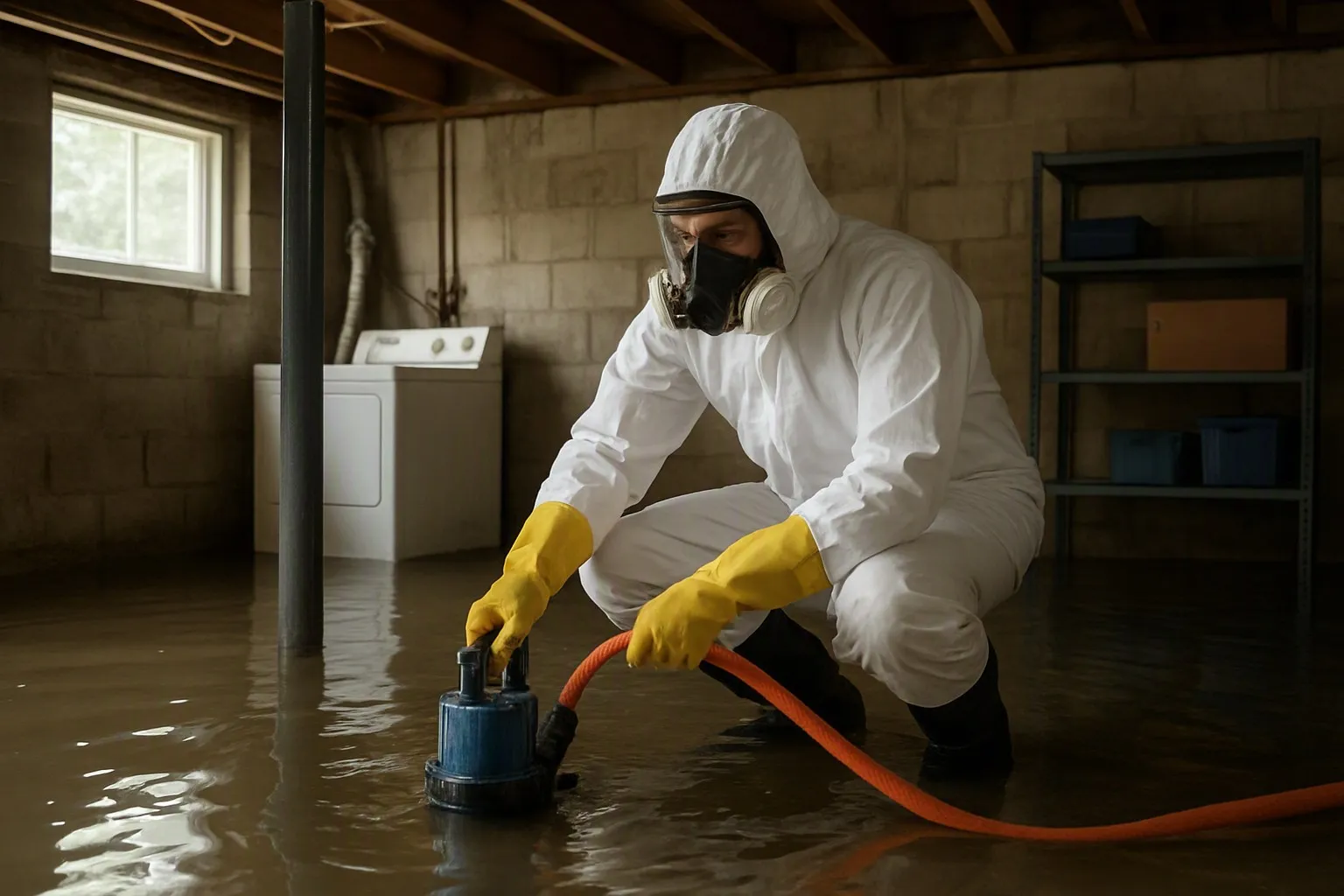
A pipe bursts at 2 a.m. Water spreads across a wide-plank oak floor and starts dripping into the room below. Or a supply line lets go behind a custom cabinet while you're at work. Either way, your first thought is the same: how bad is this going to get?
Restoring a luxury home after major water damage is not the same as restoring a standard house. The water is ordinary. The house isn't. Custom millwork, hand-finished floors, natural stone, built-ins, artwork, and smart-home wiring all react to moisture in ways that builder-grade materials don't.
Here's what to do first, what the process really looks like, and the mistakes that cost high-end homeowners the most money.
Quick answer: Stop the water, cut power to wet rooms, and call a restoration company that works on high-value homes, ideally within the first hour. Don't run your own fans or shop vacs, and don't start pulling up floors. A good crew finds hidden moisture, dries the house at a controlled pace, and rebuilds with materials that match what you already have.
Why a Luxury Home Is a Different Kind of Job
In a typical house, restoration often means rip out and replace. Drywall is cheap. Carpet is cheap. Cabinets come in standard sizes off a warehouse shelf.
Your home usually doesn't work that way. One room might have imported stone, cabinetry that took 12 weeks to build, and a floor stained to a color nobody stocks anymore. Tearing it out is easy. Putting it back is the hard part.
So the goal changes. Instead of "remove wet stuff fast," the goal becomes "save as much as we can, replace only what's truly ruined, and match what's left." That takes longer. It also protects a lot of value.
What to Do in the First Hour
Do these in order. Don't skip ahead.
- Shut off the water. Main valve if you can find it fast, or the fixture valve under the sink or behind the toilet.
- Cut power to wet rooms at the breaker — but only if you can reach the panel without standing in water.
- Take photos and video. Wide shots of every room, close-ups of damaged finishes, and a shot of the water source. Your adjuster will want these.
- Move what you can lift. Small art, electronics, papers, rugs, and anything sitting on a wet floor. Get them to a dry room on a table, not on the floor.
- Stay off wet hardwood and stone. Every step can push water deeper into seams and grout.
- Call a restoration company that handles high-value homes. You can reach one any hour of the day at (888) 217-4575.
Don't run your own box fans or a shop vac "to help." Fans blowing across a wet room can push moisture into walls and cabinets that were dry a minute ago. Shop vacs will not get the water that's already under the floor.
What the Restoration Process Actually Looks Like
Finding all the water — not just the wet spot
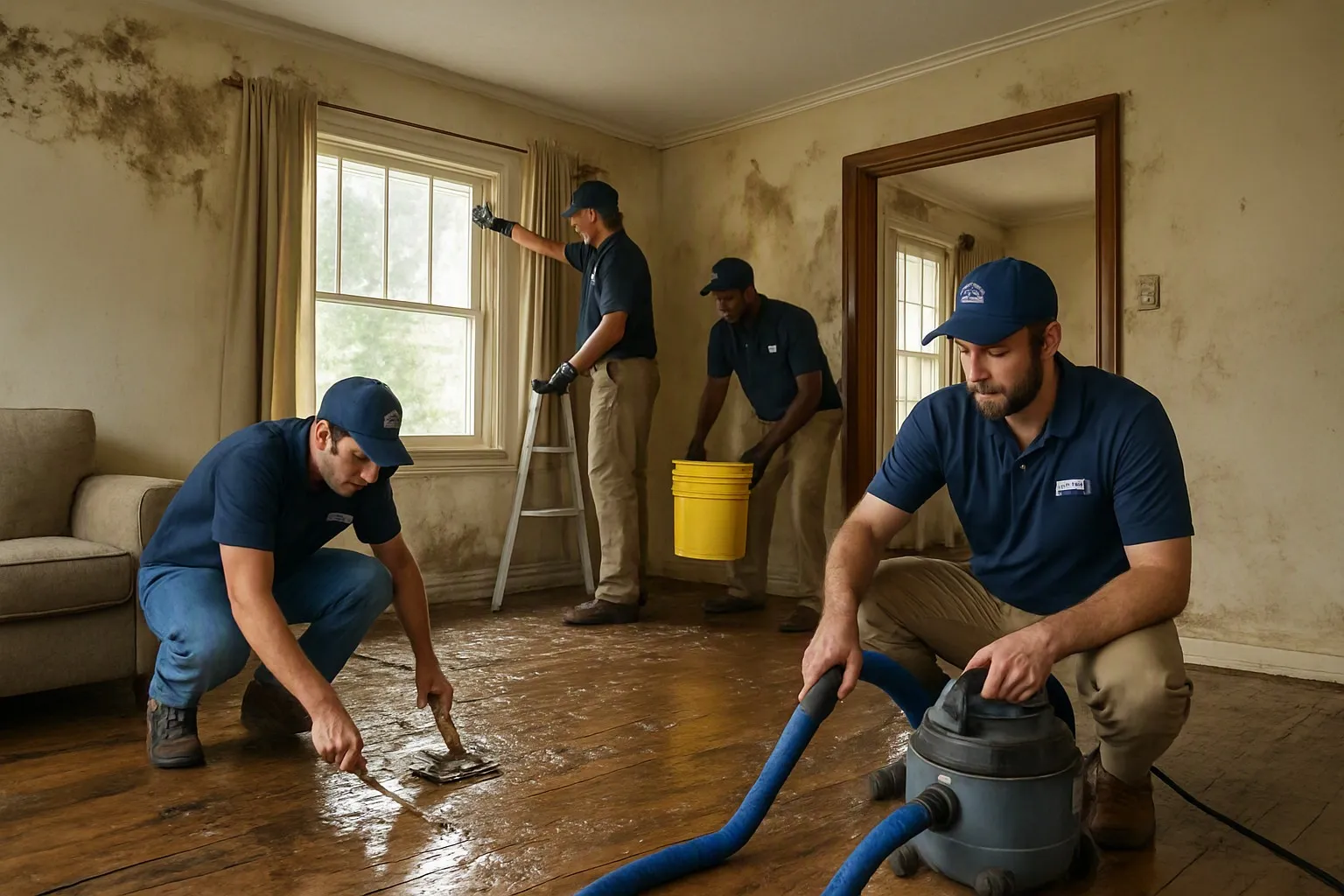
A tech will walk the house with moisture meters and a thermal camera. In a big home, water travels far. It follows joists, runs down inside walls, and pools in ceiling trays and crawl spaces.
I've seen a small leak on an upper floor show up 30 feet away in a lower-level bar area. If nobody checks, that spot turns into mold in about a week.
Drying at a controlled pace
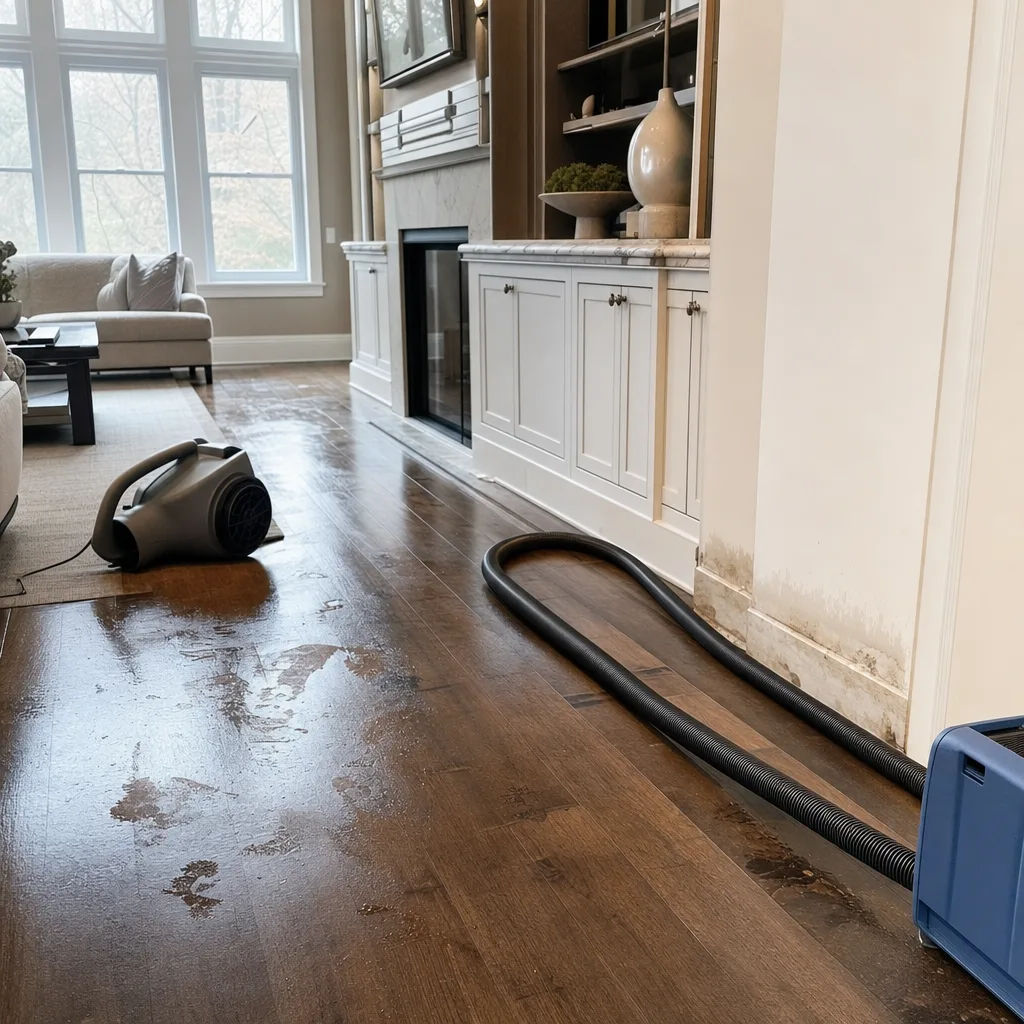
High-end homes often get what's called a closed drying system. Windows stay shut, and dehumidifiers plus air movers pull moisture out of the air and the building materials. You may see low-profile drying mats taped to the floor to pull water up out of the wood.
Drying too fast is a real problem. Blast a marble floor or a solid wood cabinet with hot, dry air and you can crack stone, split panels, and open gaps in millwork that were fine before. Slow and steady wins here.
Deciding what stays
Then comes the hard part. Some materials can be dried and saved. Some can't. Good restoration teams test before they cut, and they document why each item was saved or removed. That documentation matters at claim time.
The Materials That Cause the Most Trouble
Hardwood and custom floors
Wood cups, crowns, and gaps when it gets wet. If the leak is caught in the first day or two, engineered and solid floors can sometimes be dried flat with mats and saved. Older, thicker, or glued-down floors are harder. Refinishing means matching the old stain, which isn't always a perfect match. Ask the crew to save a piece of the original flooring for the color match.
Stone, marble, and tile
Stone is porous. Marble and limestone can stain and etch from dirty water. Water also hides under tile and in the thinset, so a floor can feel dry on top and stay wet for days underneath. Grout and caulk lines often need to be cut open to let air in.
Custom cabinets and built-ins
Cabinet boxes, toe kicks, and veneers soak up water fast. The tricky part is that a cabinet can look fine on the outside while the back panel and bottom shelf are swelling. Usually the fix is to remove the toe kick and dry from underneath, not to rip out the whole wall of cabinetry.
Artwork, rugs, and antiques
Paper and canvas can grow mold in as little as 48 hours in a warm, humid room. Don't wipe paintings or try to dry them with a hair dryer. Call an art conservator. Rugs need to be rolled and sent for professional cleaning, not left on a wet floor to bleed dye.
Smart-home systems and wiring
Low-voltage wiring, control panels, ceiling speakers, motorized shades, and home theater gear all hate moisture. Even if they power on later, corrosion can cause failures months down the road. Tell your restoration team where the panels and racks are on day one.
Insurance on a High-Value Home: What to Watch For
Most standard policies cover sudden water damage, like a burst pipe. They usually don't cover gradual leaks you could have seen coming. That's a common argument, so photos and dates matter.
- Check whether your art, jewelry, and collectibles are scheduled on the policy. Standard contents limits often fall far short.
- Don't throw anything away before it's documented. Even ruined items are evidence.
- Get your own repair estimate. A first offer based on builder-grade materials will not come close to covering custom work.
- Keep a running list of every call, visit, and receipt. It makes the claim move faster.
If you're not sure who to call, (888) 217-4575 is answered 24/7 and can point you to a crew that handles high-end homes in your area.
Rebuilding: Matching the Finish Matters More Than Speed
Two things usually slow a high-end rebuild: custom order times and finish matching.
Custom cabinetry often takes 8 to 16 weeks. Specialty stone can take just as long. Order early, even before demo is finished, so you're not living in a torn-up room for months.
The other issue is matching. Stain colors change with age. Tile dye lots vary. Paint fades. A good contractor will test a sample board in your lighting before committing, and will sometimes refinish a whole wall or run of cabinets so the repair blends instead of standing out.
One rule: don't let anyone rebuild over materials that are still wet. It's the fastest way to grow mold behind a brand-new wall.
Mistakes Homeowners Make
- Waiting a day to call. Mold can start in 24 to 48 hours. Every hour counts.
- Letting the first truck that shows up start cutting. Ask how they handle custom finishes and stone. If they can't answer, keep calling.
- Trusting a dry hand. Dry to the touch is not dry. Only a meter tells you the truth.
- Running the AC to "dry things out." It can spread moisture through the ducts and cool the house too much for drying to work well.
- Throwing out damaged items. You'll need them for the claim.
- Forgetting to mention the smart home. Water and electronics are a bad mix, and it's easy to miss.
How Long Does It Usually Take?
Every home is different, but here's a rough idea.
- Day 1: emergency call, water removal, drying equipment set up.
- Days 3 to 7: drying. Thick stone, plaster, and large homes can run 10 days or more.
- Week 1 to 2: documentation, decisions on what gets replaced, insurance back-and-forth.
- Weeks to months: rebuild. Custom cabinetry and imported stone drive most of the wait.
If someone promises a full luxury rebuild in two weeks, ask questions. Fast is good. Fast and dry is better.
Frequently Asked Questions
Can wet hardwood floors in a luxury home be saved?
Sometimes. If the water is caught within a day or two and the floor is solid, a crew can often dry it flat with floor mats and then refinish it. Floors that have been wet for a week, or that are glued down over concrete, usually need to be replaced.
Does homeowner's insurance cover water damage in a high-value home?
Sudden damage, like a burst pipe or a failed water heater, is usually covered. Slow leaks and poor maintenance often aren't. High-value items like art and jewelry may need their own coverage, so read the policy before you need it.
How long does it take to dry a large home?
Most homes take 3 to 7 days. Big houses with stone, plaster, or thick hardwood can take 10 days or longer. The crew should check with meters every day and not stop until the readings match a dry area of the house.
Should I run my own fans and dehumidifiers?
No. Home fans can push moisture into places it wasn't before. A small dehumidifier won't keep up with a real leak. Leave the equipment to the pros and keep the house closed up the way they ask.
Will mold grow in an expensive home after a leak?
It can start in 24 to 48 hours if the area stays damp and warm. That's why fast drying matters so much. If you smell that musty odor weeks later, call for mold removal right away instead of painting over it.
Do my custom cabinets have to be replaced?
Not always. Many cabinets can be dried in place by removing the toe kick and letting air move underneath. If the particle board or the bottom shelf has swollen, that section usually has to be rebuilt by a cabinet maker to match.
You Don't Have to Figure This Out Alone
The first hour after a leak decides how much of your home you get to keep. Stop the water, stay off the wet floors, take pictures, and get a trained crew on the phone.
AB Water Damage Restoration works with restoration teams across the country who handle high-end homes, custom finishes, and complicated claims. Call (888) 217-4575 any time, day or night. It's free to ask questions, and it's better to ask now than to fix it twice.