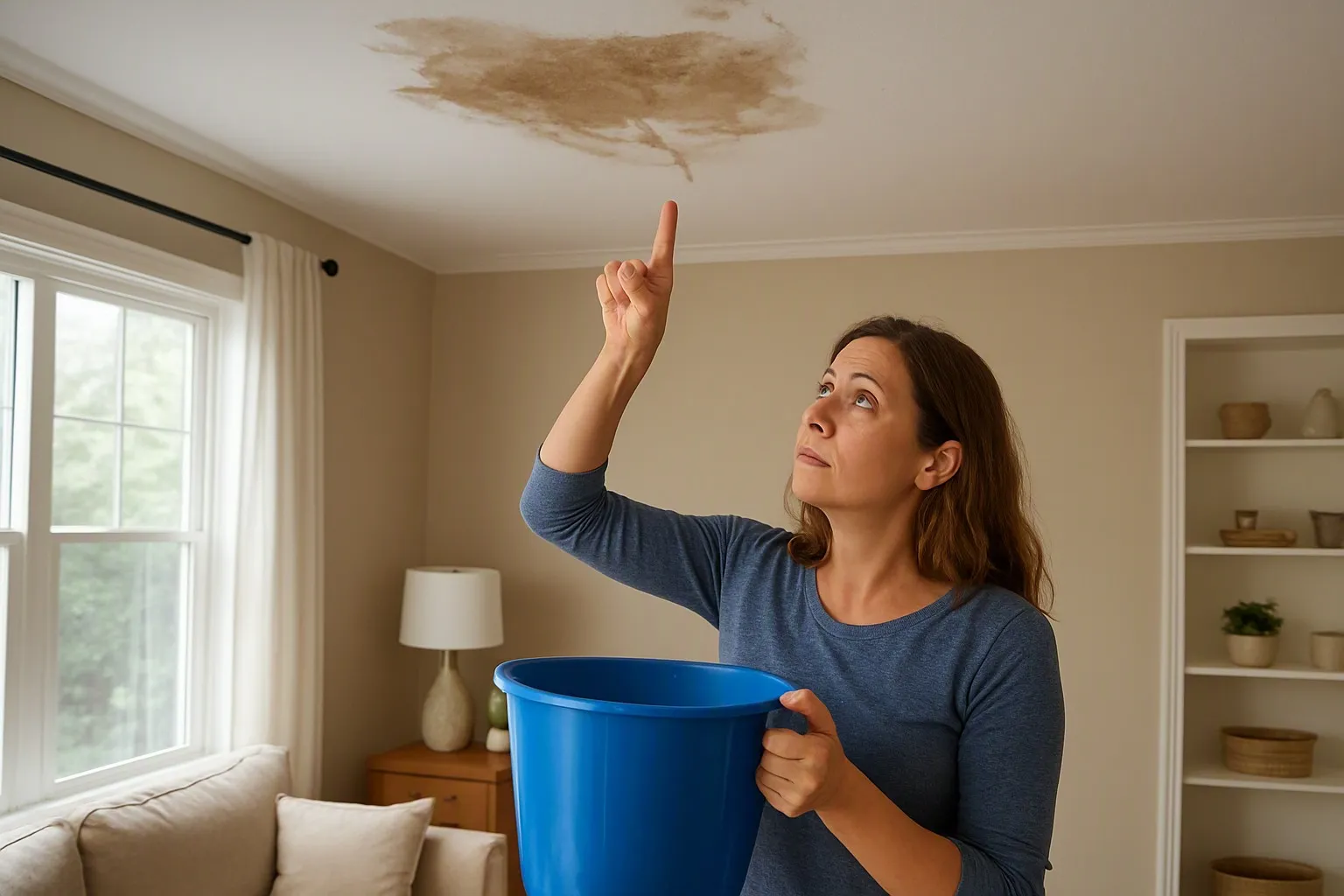
Water on the ceiling is never just a stain. By the time you see it, the leak has likely been running for hours or days above your head. We see this every week: a homeowner spots a brown ring, pokes it, and suddenly the whole sheet comes down. Don't poke it. Don't wait. Here is what to do right now.
The First 10 Minutes: What You Do Right Now
Speed matters more than anything else. Every minute the water sits, it soaks deeper into insulation, framing, and the floor below. Mold can start in 24 to 48 hours. We have pulled out ceilings that looked fine on the outside but were black with mold on the back side.
- Find and stop the water. If it's a burst pipe, turn off the main valve. Usually it's in the basement, crawl space, or near the water heater. If it's a roof leak, you can't stop the rain, but you can put a tarp up if it's safe.
- Catch what's falling. Buckets, stock pots, plastic totes — whatever you have. Put towels around the base so water doesn't track across the floor.
- Move stuff out. Furniture, rugs, electronics, anything that can soak water or get stained. If it's too heavy to move, slide aluminum foil or plastic wrap under the legs.
- Turn off power to that room. Water and wiring don't mix. Flip the breaker for the affected area. If water is near light fixtures or ceiling fans, do not turn them on.
- Call us. (855) 235-1821. Our technicians are IICRC-certified, we answer 24/7, and we are usually at your door in about an hour. We handle the insurance paperwork directly so you don't have to fight adjusters.
How to Tell How Bad It Really Is
You can't always see the full picture from below. Water travels. It follows joists, runs along wiring, and pools in low spots far from the actual leak. Here is what we look for when we arrive:
- Sagging or bowing drywall means the ceiling is holding gallons of water. It will fail.
- Active dripping means the leak is still live. Even a slow drip adds up fast.
- Brown or yellow rings that grow daily. Mark the edge with a pencil and check tomorrow. If it's bigger, the leak is active.
- Musty, wet-cardboard smell. That's mold starting. You may not see it yet.
- Peeling paint or bubbling plaster. The bond has failed. That section is coming down.
- Soft spots when you press gently (use a broom handle, not your hand). If it gives, the material is shot.
| Sign | What It Means | Urgency |
|---|---|---|
| Faint yellow stain, dry to touch | Old leak, possibly fixed | Monitor, investigate source |
| Dark stain growing daily | Active slow leak | Call us within 24 hours |
| Active dripping, sagging | Major leak, structural saturation | Emergency — call now |
| Bulging, soft, mold smell | Failure imminent, mold likely | Emergency — evacuate room |
Common Leak Sources We Find
Knowing where the water came from helps us fix it right the first time. These are the top culprits we see in the field:
Bathroom Above
Toilet wax ring failures, shower pan cracks, tub overflow drains, loose supply lines. A toilet that rocks even a little will wreck the ceiling below in a week. We see this constantly.
Roof Leaks
Flashing failures around chimneys, vents, skylights. Missing shingles. Ice dams in winter forcing water under shingles. Roof leaks often show up far from the actual entry point because water runs down rafters.
HVAC and Plumbing in the Attic
Condensate drain lines clog and overflow. Water heater supply lines burst. PEX fittings fail. In cold climates, frozen pipes split and don't leak until they thaw.
Second-Story Laundry
Washer supply hoses burst. Drain hose pops off. We recommend braided stainless hoses and a leak pan with a drain — cheap insurance.
What We Do When We Arrive
You don't need to guess. Our process is the same every time because it works:
- Stop the source if it's still running. We carry shutoff tools and can cap lines fast.
- Contain the area with plastic barriers so spores and dust don't spread through your HVAC.
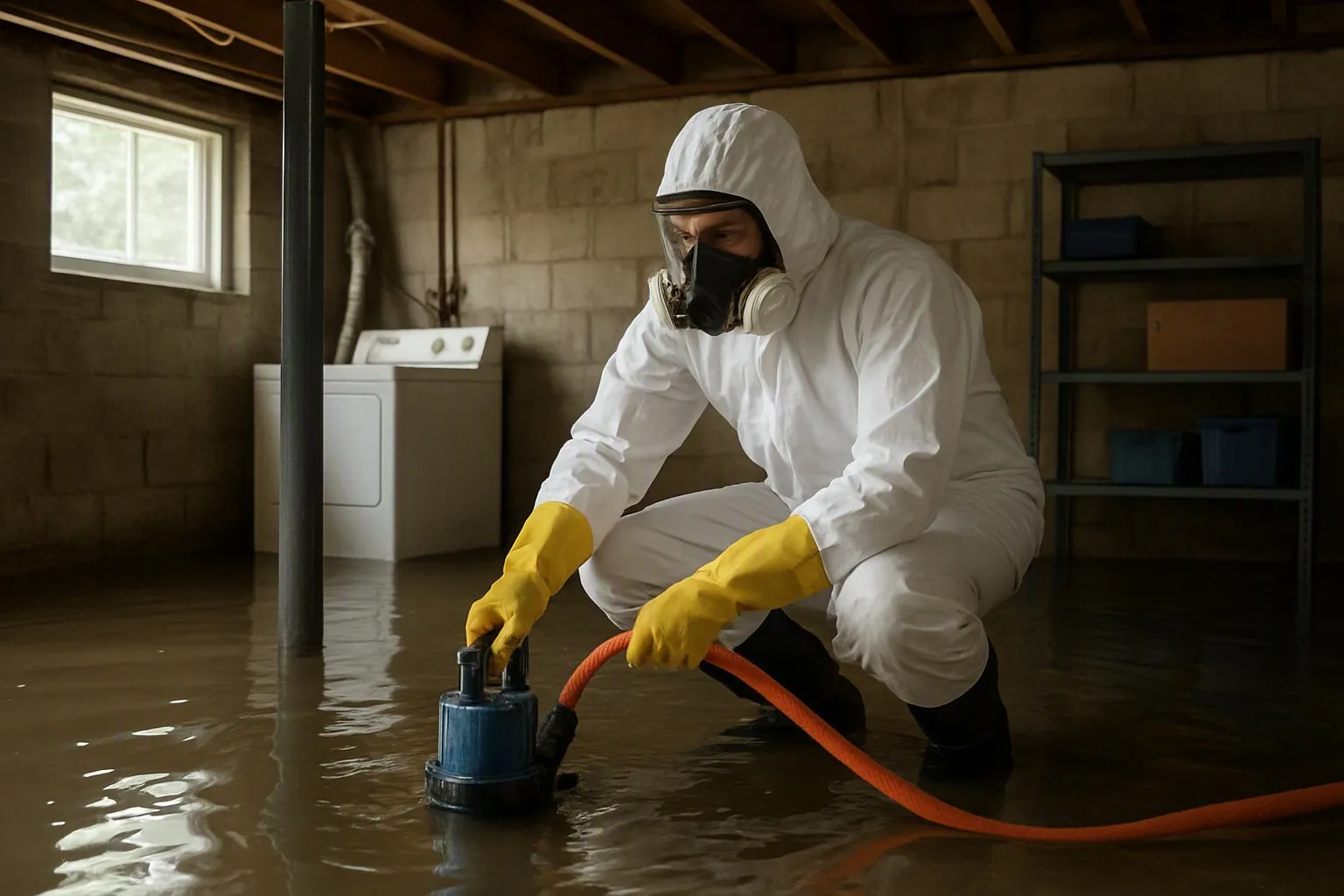
- Extract standing water with truck-mounted vacuums. We pull gallons out of carpet, pad, and subfloor.
- Controlled demolition. We cut out only what's wet. Drywall, insulation, sometimes ceiling joists if they're rotted. We don't rip out good material.
- Dry the structure. Commercial dehumidifiers and air movers. We monitor moisture meters daily until framing reads under 16% moisture content.
- Treat for mold prevention. EPA-registered antimicrobial on all exposed framing.
- Document everything with photos, moisture maps, and line-item estimates for your insurance.
- Rebuild. We hang, tape, texture, and paint so you never know it happened.
Drying: Why Fans Alone Don't Work
A box fan on the floor does almost nothing for a wet ceiling. Air has to move across the wet surface, and moisture has to leave the room. Our drying systems move 2,000+ CFM per air mover and pull 70+ pints per day per dehumidifier. We create a balanced drying chamber — intake, exhaust, heat — so the water actually leaves the wood and drywall instead of just evaporating into the air and condensing somewhere else.
We check moisture daily with penetrating and non-penetrating meters. We track specific humidity, grain depression, and equilibrium moisture content. That's how we know when it's done — not when it "feels dry."
Insurance: What You Need to Know
Most policies cover sudden, accidental water damage — burst pipe, appliance failure, storm-created opening. They usually do NOT cover gradual leaks, maintenance issues, or flood from rising groundwater (that's a separate flood policy).
We work with all major carriers. We speak their language: Xactimate estimates, moisture documentation, cause-of-loss reports. We have adjusters tell us our paperwork is the cleanest they see. That means faster approval, fewer supplements, less hassle for you.
Do not let an adjuster tell you to use their "preferred vendor" if you don't want to. It's your home. You choose who repairs it. We will coordinate directly with your adjuster so you don't play middleman.
Why Homeowners Call Us First
- On site in ~60 minutes, 24/7/365, all 50 states
- IICRC-certified technicians, not day laborers
- We bill insurance directly — you pay your deductible only
- Full rebuild included — one crew, start to finish
- Free assessment, no pressure
What We Don't Do
- We don't upsell unnecessary tear-out
- We don't leave you waiting for callbacks
- We don't disappear after the dry-out
Mold: The Silent Follow-Up
If the ceiling was wet more than 48 hours before we start drying, assume mold is there. It grows on the paper backing of drywall, on insulation, on wood joists. You won't see it until we open the ceiling.
We treat every water job as a potential mold job. Containment, negative air pressure, HEPA filtration, PPE. If we find microbial growth over 10 square feet, we follow IICRC S520 mold remediation protocol. That means full containment, air scrubbing, HEPA vacuuming, antimicrobial treatment, and post-remediation verification by a third-party hygienist if you want it.
Don't spray bleach and call it good. Bleach doesn't penetrate porous material. The roots stay alive and come back. We remove the contaminated material, treat the framing, and verify it's clean.
How Long Until Life Is Normal?
Depends on the damage. A small bathroom leak caught fast: 2-3 days dry time, 1-2 days rebuild. A roof leak that soaked two rooms and sat for a week: 5-7 days drying, 3-5 days rebuild. We give you a real timeline after we see it — not a guess.
You can stay home during most jobs. We isolate the work area. If mold remediation requires full containment, we'll talk through temporary relocation options and what your policy covers for loss of use.
Preventing the Next One
After we're done, here is what we tell every homeowner:
- Inspect your roof annually. Binoculars from the ground work. Look for curled, cracked, or missing shingles.
- Replace toilet wax rings every 5-7 years or any time you pull a toilet.
- Swap rubber washer hoses for braided stainless on washer, dishwasher, ice maker. $20 each.
- Test your main shutoff valve once a year. Turn it off and on. If it's stuck, replace it before you need it.
- Clean gutters and downspouts. Clogged gutters force water under the roof edge.
- Check attic insulation for damp spots after heavy rain. Catch roof leaks early.
Frequently Asked Questions
Can I just paint over the water stain?
No. Paint traps moisture and mold grows behind it. The stain will bleed through in weeks. The wet material must come out, the structure dried, then new drywall and paint.
How much does ceiling water damage repair cost?
Small contained leak: $1,200-$3,000. Multi-room with mold: $5,000-$15,000+. Major structural damage: $20,000+. Your deductible is usually the only out-of-pocket if covered. We give a free, detailed estimate before any work starts.
Will my insurance rates go up?
One claim usually doesn't spike premiums. Multiple claims in 3-5 years might. We can't control your carrier, but we document thoroughly so the claim is clean and closed fast.
How fast can you get here?
Average 60 minutes anywhere in the continental U.S. We have teams staged nationwide. Call (855) 235-1821 and we dispatch the nearest crew.
Do I need to be home?
Ideally yes for the initial walkthrough. After that, we can work with a lockbox or hidden key. We photo-document everything daily so you see progress.
What if it's the weekend or a holiday?
We don't close. 24/7/365. Water doesn't wait for business hours and neither do we.
That ceiling isn't going to fix itself. The longer you wait, the more it costs. Call AB Water Damage at (855) 235-1821 right now for a free assessment. We're here all night.